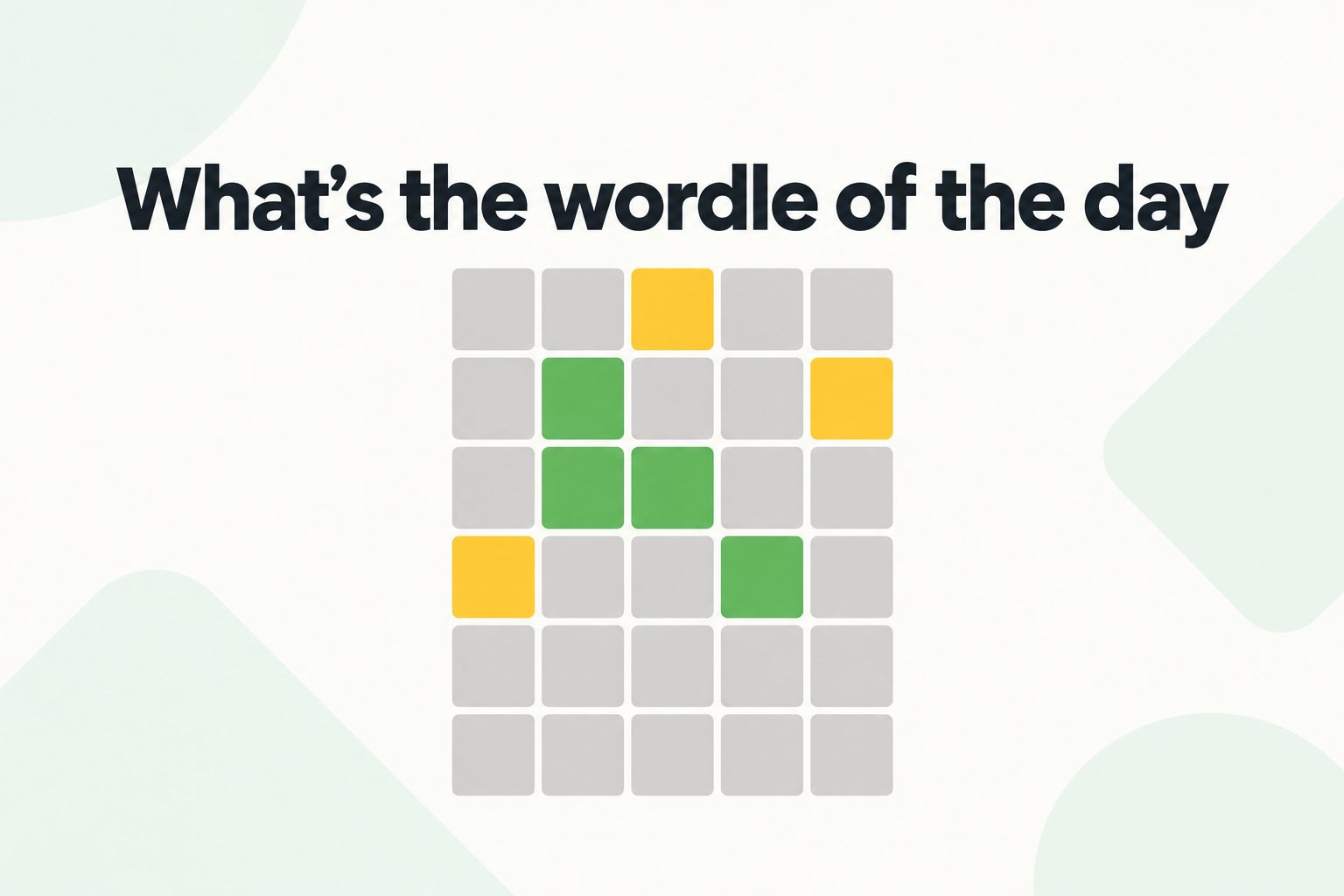
If you are asking, “What’s the Wordle of the day?” you probably want today’s five-letter answer without losing the fun of solving it yourself. Wordle gives every player the same daily puzzle, creating a small shared challenge that can be played in a few quiet minutes.
The daily Wordle is more than a vocabulary game. It encourages pattern recognition, careful guessing, and a little friendly conversation with other players. Whether you want a gentle hint, a stronger strategy, or the final answer after finishing, it helps to know how the game works.
This guide explains how to approach the Wordle of the day, interpret tile colors, choose stronger opening words, avoid common traps, and decide when to look for help. The goal is to make each daily puzzle more satisfying, not simply to rush through it.
Wordle presents one hidden five-letter word each day and allows six attempts to find it. After every guess, the game provides color clues that show which letters are correct, misplaced, or absent from the solution.
A green tile means the letter is correct and already in the right position. A yellow tile means the letter appears in the answer but belongs somewhere else. A gray tile usually means that letter is not used in the target word.
The important detail is that every guess should teach you something. Even a word that is not close to the answer can be valuable when it tests common letters, vowels, and possible letter positions.
The Wordle of the day is the same for players during that day’s puzzle cycle, which makes results easy to compare without sharing the answer. Many people use spoiler-free score grids to discuss how efficiently they solved it.
A calm, repeatable approach matters more than obscure vocabulary. Strong players narrow possibilities methodically, notice repeated-letter patterns, and keep each clue in view before entering the next guess.
How Can You Solve Today’s Wordle?
1. Start With A Balanced Guess
Choose an opening word with common letters and at least two vowels, such as a word containing A, E, R, S, or T. The best first guess is not a magic answer; it is a way to collect useful information quickly and begin reducing the number of possible words.
2. Read Every Color Carefully
Pause after each guess and separate confirmed information from possibilities. Keep green letters fixed, move yellow letters to new positions, and normally avoid gray letters. This prevents a common error: making a guess that ignores clues already provided by the puzzle.
3. Test Unused Common Letters
When the first guess produces few matches, use a second word to test several high-frequency letters at once. This can reveal the word’s building blocks faster than repeatedly guessing around one uncertain letter position, especially early in the game.
4. Check Letter Positions
A yellow result is not merely a useful letter; it is also a position restriction. If a letter was yellow in the second slot, do not place it there again unless a repeated-letter situation clearly requires it. Position logic steadily removes bad options.
5. Watch For Repeated Letters
Do not assume each letter can appear only once. Words with double vowels or repeated consonants can be difficult because an early gray tile may reflect an extra copy rather than the complete absence of that letter. Compare all tile feedback before deciding.
6. Use A Narrowing Guess
Once you know several letters, select a guess that separates the remaining candidates instead of choosing the first word that looks plausible. A strategic word can test two uncertain positions or distinguish similar endings, giving you a better chance of solving within six attempts.
7. Protect Your Final Attempts
When only a few guesses remain, avoid impulsive choices. Review the full board, list likely word patterns mentally, and confirm that your proposed answer obeys every green, yellow, and gray clue. A brief check often saves the final turn.
Why Does The Daily Wordle Matter?
1. The shared puzzle creates a simple daily ritual that friends, families, and coworkers can discuss without needing a long time commitment.
2. Its six-guess limit makes decision-making meaningful because each guess has value beyond whether it immediately solves the word.
3. The game can strengthen awareness of spelling patterns, vowels, consonant blends, and common word endings in an enjoyable setting.
4. A daily format discourages endless scrolling and gives the challenge a natural stopping point after one puzzle.
5. Comparing spoiler-free outcomes can be social and motivating while still allowing each person to solve independently.
Best Practices For The Wordle Of The Day
- Use A Consistent Opener: A familiar first word makes it easier to compare strategies over time and helps you learn which letter combinations give useful information.
- Prioritize Information: Early guesses should reveal letters and positions, not simply chase a word that happens to look attractive.
- Respect Gray Tiles: Avoid reusing eliminated letters unless you have a clear reason to investigate a repeated-letter pattern or a prior clue was misunderstood.
- Keep Vowels In Mind: When the board is unclear, testing unused vowels can expose the structure of the hidden word and remove many unlikely choices.
- Avoid Spoilers: If you share results, use a spoiler-free grid or wait until others have had a chance to play the daily puzzle.
- Review Before Submitting: Take a few seconds to confirm that your guess matches all known tile clues, particularly yellow-letter placement restrictions.
Common Wordle Of The Day Mistakes To Avoid
1. Reusing Eliminated Letters
A frequent mistake is typing a familiar-looking word that includes several gray letters from earlier attempts. Unless you are checking for a duplicate-letter exception, this wastes a valuable guess. Build every new guess around information that remains possible rather than habits from ordinary spelling.
2. Treating Yellow Tiles As Fixed
A yellow tile confirms that a letter belongs in the solution, but it also proves that the letter is not correct in its current location. Players often keep it in the same position because the word shape looks convincing. Move it deliberately and test alternative placements.
3. Guessing Too Quickly After A Green
One green letter can create false confidence. Before filling in the rest of a pattern, consider common endings, alternative consonants, and repeated letters. Several words may fit the same partial structure, so a little extra comparison can prevent an avoidable late-game miss.
4. Forgetting Duplicate Letters
Repeated letters are one of Wordle’s classic traps. A word can contain two copies of a letter even when a guess appears to show only one useful result. Read the entire row of feedback and consider whether the target pattern could support a second occurrence.
5. Chasing Rare Vocabulary Too Early
Unusual words may occasionally be valid, but they are rarely the best early choice. Common letters and recognizable word structures usually produce stronger information. Save less familiar possibilities until the board genuinely points toward them and ordinary alternatives have been ruled out.
6. Ignoring Available Information
Looking up the Wordle of the day before using your own clues can remove the most rewarding part of the game. Try a hint that protects the answer first, such as a starting letter or word pattern, then seek the solution only if you truly need it.
7. Sharing The Answer Carelessly
Because the Wordle puzzle is shared, revealing the answer in a message or conversation can spoil another person’s daily game. Ask whether someone has completed it before discussing specific letters, and keep any result-sharing focused on attempt counts rather than the solution.
The Wordle of the day is easiest to enjoy when you treat each guess as a source of information. Strong opening words, careful color reading, and attention to letter placement will improve your results over time.
There is no need to solve every puzzle perfectly. Some daily words are designed to test repeated letters, uncommon patterns, or misleading endings, and those challenges are part of what makes the game memorable.
Use hints only at the level that helps you keep playing. With a consistent method and a little patience, you can protect the satisfaction of discovering today’s answer for yourself.
FAQs About The Wordle Of The Day
1. What Is The Wordle Of The Day?
The Wordle of the day is the single five-letter puzzle available to all players during that day’s game cycle. Everyone receives the same target word, although the displayed puzzle number and reset time can vary slightly depending on location and device settings.
2. How Many Guesses Do You Get In Wordle?
You get six guesses to identify the hidden five-letter word. Each submitted guess returns colored tile feedback, allowing you to refine later attempts. The limit makes it important to choose words that reveal useful letters and positions rather than guessing randomly.
3. What Do Green And Yellow Tiles Mean?
Green means the letter is in the answer and in the correct position. Yellow means the letter appears in the answer but belongs in another position. Gray usually means the letter is not in the target word, though duplicate-letter situations require careful interpretation.
4. Should You Look Up Today’s Wordle Answer?
That depends on what you want from the game. If you still want to solve it, begin with a light hint such as the first letter or a general word pattern. Looking up the full answer is reasonable after you finish or decide that you need closure.
5. What Is A Good First Word For Wordle?
A good first word includes common letters and useful vowels, giving you broad information from one guess. There is no universally perfect opener because daily answers differ, but a consistent, balanced word helps you develop a reliable process and recognize patterns more quickly.
6. Can A Wordle Answer Have Repeated Letters?
Yes, a Wordle answer can contain repeated letters, including double consonants or double vowels. This is why tile colors must be read as a complete set rather than one letter at a time. When a pattern seems impossible, test whether a letter could appear twice.