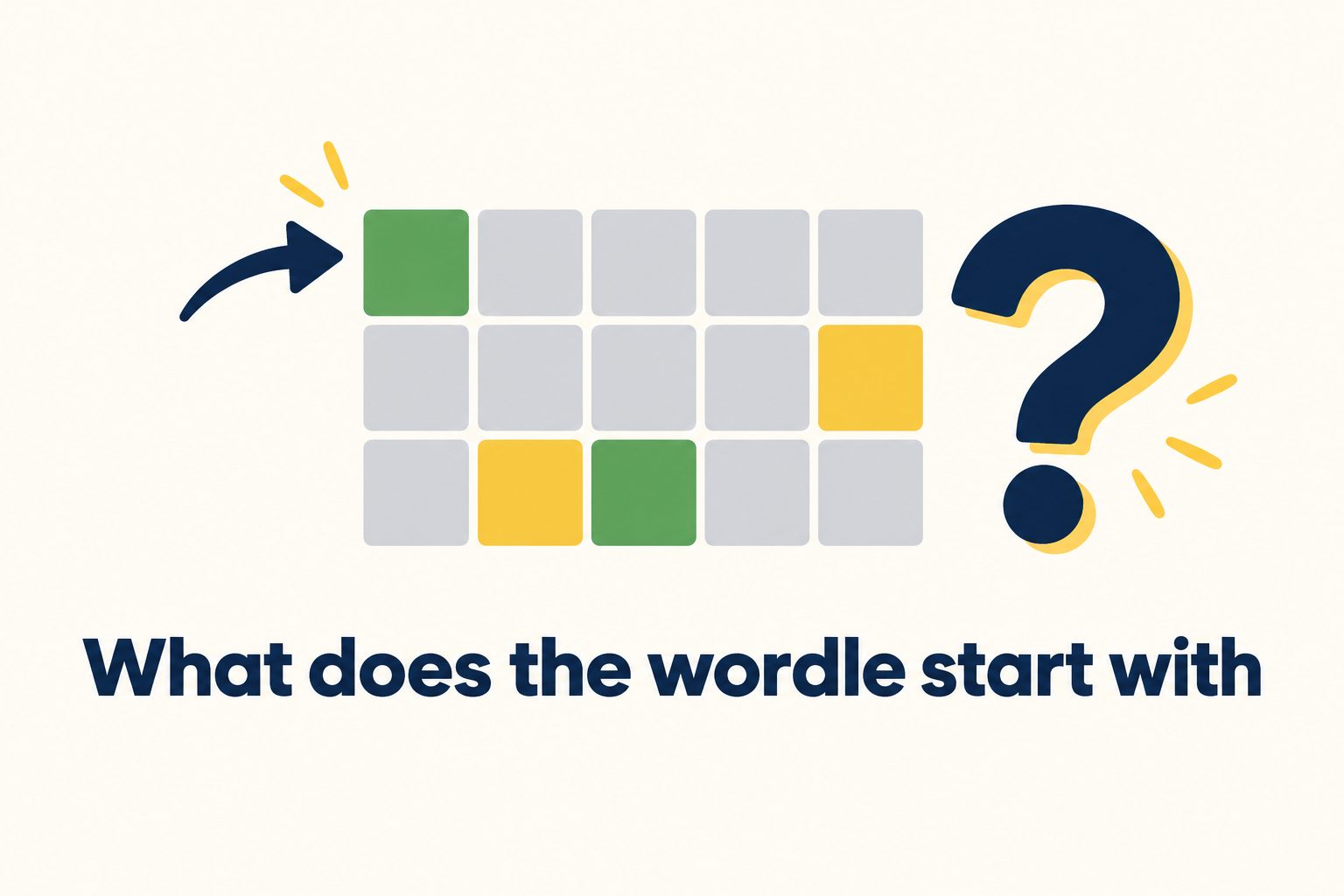
If you are asking what does the Wordle start with, the answer depends on what you mean: the daily puzzle begins with a hidden five-letter word, while a strong player begins with a thoughtful opening guess. Wordle gives six chances to identify that word through letter and position clues.
A good starting word is not a guarantee of success. Its value comes from testing common letters, useful vowels, and different positions early enough to shape your next guess. This makes the game less about luck and more about gathering information.
This guide explains what the Wordle starts with, how opening words work, why they matter, and how to improve your first few guesses without turning a simple daily puzzle into unnecessary stress.
Wordle starts each daily game with one secret five-letter answer chosen for that puzzle. Every player receiving the same daily challenge faces the same answer, although the answer changes on the next day.
Your first typed word does not need to be the answer. It is an opening guess designed to reveal information through colored tiles. Green means the letter is correct and correctly placed, yellow means it appears elsewhere, and gray means it is not in the answer.
Because the answer is hidden, players often use a familiar five-letter word containing common letters. The aim is to reduce the number of possible answers quickly while keeping later guesses flexible.
There is no officially required first word that works best in every game. Different approaches can succeed, but strong openers tend to avoid repeated letters and include commonly used vowels and consonants.
The best starting habit is to pay attention to the feedback instead of repeating a favorite opener blindly. A useful first guess only helps when the second guess responds intelligently to the clues.
What Does Wordle Start With Each Day
A Hidden Five-Letter Answer
Each daily Wordle begins with a single hidden five-letter answer. The player sees an empty grid rather than a clue, definition, category, or first letter. The task is to discover the word by making valid five-letter guesses and interpreting the result after each turn.
An Empty Six-Row Grid
The visible game starts with six blank rows, giving you up to six attempts. This limit makes the opening guess important because every row should either solve the word or remove meaningful uncertainty. Treating early rows as information-gathering moves creates more useful later choices.
A Blank Keyboard
The on-screen keyboard also begins without evidence. As you play, it records letters that seem absent or present, helping you avoid accidental repeats. It is a convenient summary, but it does not replace careful thinking about letter position and possible repeated letters.
A First Guess Of Your Choice
Wordle does not force a beginning word. You may start with any accepted five-letter guess, so the phrase what does the Wordle start with often refers to the player’s preferred opener. Choose a word that tests several high-value letters instead of trying to guess the final answer immediately.
Three Types Of Color Feedback
After the first guess, Wordle starts providing its real guidance. Green tiles identify correct letters in correct positions, yellow tiles confirm letters that belong somewhere else, and gray tiles usually remove letters from consideration. These colors are more valuable than the first word itself.
A New Daily Challenge
A new daily puzzle begins with a different target word. This keeps the game fresh and means no opening word can be perfect forever. A dependable method matters more than chasing a rumored answer, because the same reasoning works across many different daily words.
Why A Strong Wordle Opening Matters
1. A strong opening tests common letters that appear in many English words and gives useful evidence quickly.
2. Using several different letters prevents one early guess from wasting information on repeated characters.
3. Including one or two vowels can show how the answer may be structured and narrow likely word patterns.
4. Common consonants such as R, S, T, L, and N often help separate many similar candidate words.
5. A flexible first word makes it easier to choose a second guess that covers missing letter groups.
6. Good opening strategy reduces guessing pressure because each color result guides the next decision.
7. A reliable method helps players stay calm when the first row contains few or no colored tiles.
Best Letters For A Wordle Starting Word
- Common Vowels: A and E are frequent choices because they appear in many five-letter answers and can reveal a word’s basic shape early.
- Useful Consonants: R, S, T, L, and N occur often enough to make them practical letters for early testing.
- Distinct Letters: Five different letters usually reveal more than a word with a repeated letter during the first guess.
- Balanced Patterns: A starter with vowels and consonants gives broader coverage than a word made mostly from one letter type.
- Simple Spellings: Familiar words are easier to evaluate quickly because you can see likely follow-up patterns without overthinking.
- Flexible Placement: Letters placed in common positions can occasionally earn a green tile while still testing useful overall coverage.
How To Use Your First Wordle Results
Read Green Tiles First
Start by protecting green letters. Keep them in the same positions on your next guess unless the game’s feedback makes a repeated-letter situation relevant. Then consider which common endings, prefixes, and vowel patterns could fit around those fixed positions.
Move Yellow Letters Carefully
A yellow letter belongs in the answer but not where you placed it. Move it to a different plausible position instead of merely placing it somewhere random. Compare the new placement with known greens and remove word patterns that would violate the clue.
Respect Gray Letters
Gray letters are usually excluded, so do not reuse them casually. However, remember that repeated letters can create tricky results. A gray tile may reflect an extra copy of a letter rather than prove that the letter is completely absent from the answer.
Choose A Purposeful Second Guess
Your second word should answer the biggest remaining questions. If the first guess had little feedback, test several common unused letters. If it revealed a pattern, choose a real candidate that checks likely positions rather than chasing every possible word at once.
Watch For Repeated Letters
Do not assume every answer uses five different letters. Once your clues point toward a common pattern, consider doubles such as two vowels or repeated consonants. Ignoring this possibility can leave players stuck with several plausible words near the end.
Avoid Random Letter Dumps
A word that contains many unused letters may be useful, but only when it fits the clues and has a purpose. Random guesses can spend a turn without improving your position. Favor legal words that test likely letters and realistic arrangements.
What does the Wordle start with? Every daily puzzle starts with a hidden five-letter word, an empty grid, and your choice of opening guess. The game then becomes a process of reading colored feedback and narrowing the possibilities.
A useful opening word tests common, distinct letters and provides a solid base for the second row. Still, the best strategy is not memorizing one magic starter; it is adapting to the evidence that appears.
Keep greens fixed, relocate yellows thoughtfully, and use grays to rule out poor options. With that approach, each guess has a clear job and the daily puzzle becomes easier to solve consistently.
FAQs About What Does The Wordle Start With
What does Wordle start with?
Wordle starts with a hidden five-letter answer and six empty guess rows. The player chooses the first word, then receives colored tile feedback after submitting it. There is no displayed clue or guaranteed first letter before the first guess.
Is there one best first Wordle word?
No single opening word wins every puzzle. Good starters usually contain common vowels, common consonants, and no repeated letters. The more important skill is using the feedback from that word to make a smarter second guess.
Should my first guess contain two vowels?
Two vowels can be helpful because they reveal the likely structure of many words. However, a starter with one vowel and several frequent consonants can also work well. Choose coverage and flexibility rather than following a rigid rule.
Why did a letter turn yellow in Wordle?
A yellow tile means the letter appears in the hidden answer but is in the wrong position in your guess. Use it again in a different plausible position while respecting any green tiles and excluding letters shown in gray.
Can the Wordle answer have repeated letters?
Yes, Wordle answers can contain repeated letters. This is why players should not assume every colored result represents only one copy of a letter. When normal word patterns stop fitting, test whether the answer may contain a duplicate.
What should I do after an all-gray first guess?
An all-gray opening guess still provides useful information because it removes five letters. Choose a second word with five different unused letters, preferably including common vowels and consonants. Do not panic or repeat excluded letters without a specific reason.