
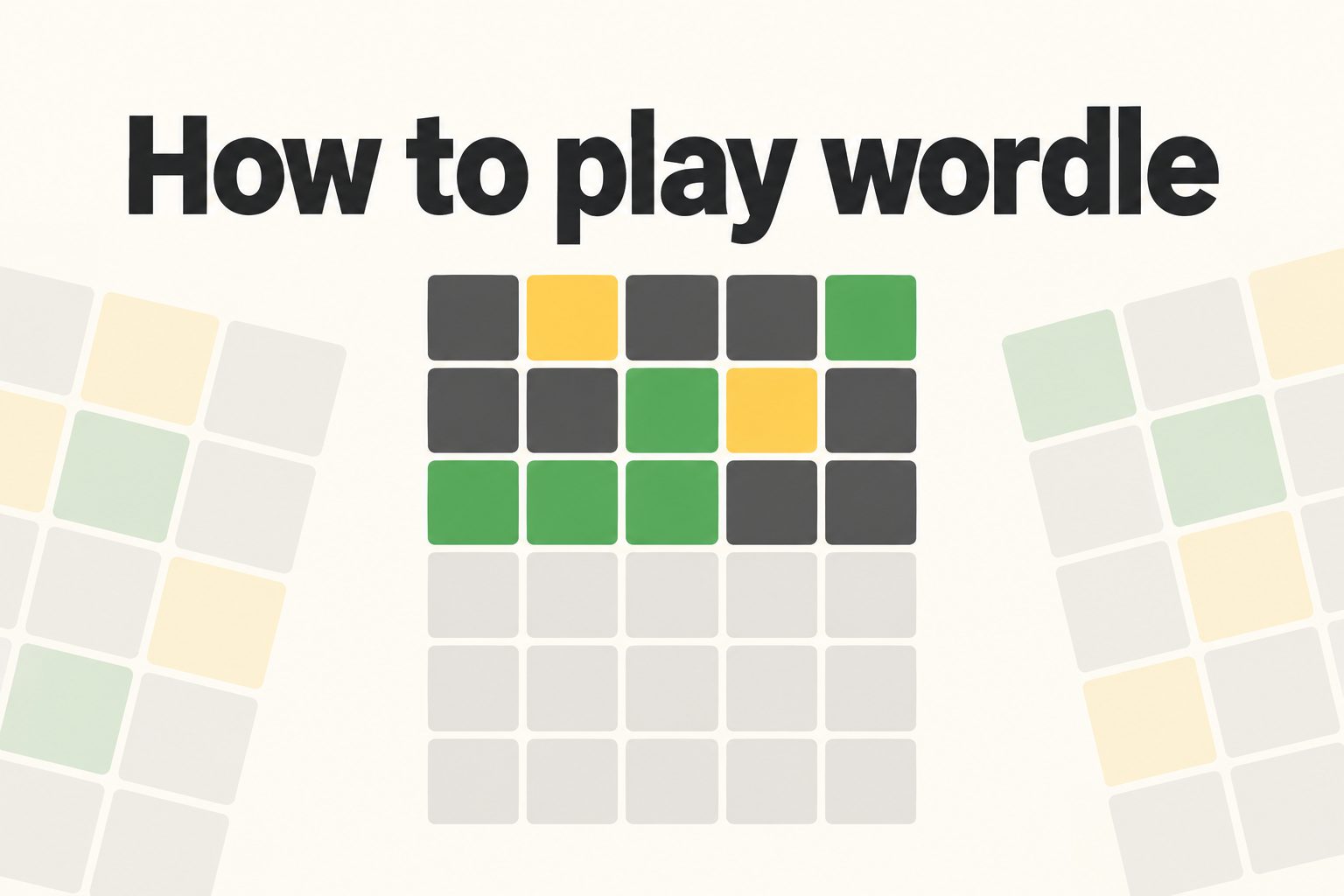
Learning how to play Wordle is simple, but playing it well takes a little logic, vocabulary knowledge, and patience. The game asks you to find one hidden five-letter word using only six guesses. After every attempt, the colored tiles show which letters are correct, misplaced, or absent.
Wordle is popular because each daily puzzle is short, satisfying, and easy to share without revealing the answer. You do not need fast typing, special equipment, or a large amount of free time. A few thoughtful guesses can turn a small word puzzle into a rewarding daily habit.
This guide explains the rules, color clues, useful opening words, practical strategies, common mistakes, and ways to improve. Whether you are solving your first puzzle or trying to protect a winning streak, the goal is to make every guess give you helpful information.
Wordle is a word-guessing game built around deduction. The answer is usually a common five-letter English word, and the board gives feedback after each submitted guess. That feedback matters more than guessing many familiar words at random.
A green tile means the letter is in the answer and already in the correct position. Keep that letter where it is unless later evidence proves you misunderstood a repeated-letter situation. Green letters quickly narrow the possible answers.
A yellow tile means the letter appears in the answer but belongs somewhere else. Use it again in a new position while considering the other clues on the board. Yellow letters are valuable because they confirm part of the word without completing it.
A gray tile usually means that letter is not in the target word. Avoid using it again, especially early in the puzzle when every guess should test useful possibilities. However, repeated letters can make gray feedback more complicated, so read the full row carefully.
The puzzle is not a spelling test alone. Strong players combine letter frequency, word patterns, and elimination. The best approach is calm and systematic: collect information, reduce the choices, and choose a guess that helps even if it is not immediately the final answer.
How Do You Play Wordle Step By Step?
Start With A Balanced Opening Word
Choose a five-letter word with several common letters and at least two vowels. Words such as SLATE, CRANE, or AUDIO can reveal useful letter information quickly. Avoid an opening guess with repeated letters because it tests fewer unique characters during the most informative stage of the puzzle.
Read Every Tile After Your Guess
Pause after submitting a word and inspect each color. Green letters are fixed in place, yellow letters must move, and gray letters should usually be removed from your options. Treat the board as evidence rather than as a prompt to guess the first word that comes to mind.
Record Confirmed Letter Positions
When a tile turns green, build future guesses around that exact position. If the second letter is green E, search mentally for patterns such as _E___ rather than words containing E anywhere. This simple habit prevents wasted guesses and makes the answer pattern easier to see.
Move Yellow Letters Carefully
A yellow letter belongs in the solution but not in the position where you played it. Try it in a different open slot while respecting green letters and excluded characters. Do not assume a yellow vowel must be next to a green consonant; test several realistic word patterns.
Remove Gray Letters From Consideration
Gray tiles eliminate many tempting guesses. Before entering another word, check whether it contains letters already marked gray. Reusing excluded letters may be reasonable only when you are testing a possible duplicate-letter pattern, but it is usually inefficient during ordinary play.
Use A Strategic Second Guess
Your second guess should respond to the first row rather than follow a fixed script. If you found few useful letters, test several new common letters. If you found a green or yellow letter, choose a word that explores its likely placements while still adding fresh information.
Choose The Final Word With Evidence
When only a few candidates remain, compare them against every clue instead of rushing. Look for possible double letters, common endings, and letters not yet tested. Submit the word that satisfies all colors, not merely the one that sounds most familiar.
Wordle Clues That Improve Each Guess
1. Greens are anchors: Keep a green letter in its confirmed position and let it shape the remaining pattern.
2. Yellows need relocation: Use a yellow letter again, but never in the same spot unless duplicate-letter evidence changes the situation.
3. Grays save turns: Excluding letters is progress because it removes many possible words from consideration.
4. Vowels reveal structure: Early vowel clues can show whether the answer likely uses A, E, I, O, or U, although some answers contain only one vowel.
5. Consonants narrow patterns: Common consonants such as R, S, T, L, and N help distinguish otherwise similar possible words.
Best Wordle Strategies For Better Results
- Use Common Letters: Prioritize high-frequency letters early because they appear in many everyday five-letter words and reveal useful patterns quickly.
- Avoid Repeated Letters Early: A word with five different letters usually provides more information than a word that repeats one character before you have clues.
- Think In Word Families: Once you see a pattern, compare likely alternatives such as _IGHT or _OUND so you can test the letters that separate them.
- Protect Your Remaining Guesses: When several answers fit the pattern, use a probe word that tests multiple candidate letters instead of blindly choosing one answer.
- Check Duplicate Letters: Remember that an answer can contain the same letter twice. If the clues seem inconsistent, consider whether one letter may appear more than once.
- Slow Down Near The End: The last two guesses are often lost through haste. Recheck every green, yellow, and gray tile before committing to a word.
Common Wordle Mistakes To Avoid
Guessing Without Using Feedback
The most common mistake is entering another familiar word without adjusting to the colors already shown. Each row should change your options. Before every guess, identify the fixed letters, misplaced letters, and excluded letters so your next word serves a clear purpose.
Using The Same Opening Every Time
A favorite opener can be useful, but treating it as a rigid system can make play less responsive. After the first row, adapt to the evidence. A strong Wordle strategy is flexible because different clue combinations require different second and third guesses.
Ignoring Letter Position
Knowing that a letter exists is not enough. Yellow feedback specifically tells you that a letter is in the wrong location. Repeating it in that same position wastes information and can lead you to miss the actual word pattern.
Forgetting Possible Double Letters
Many players eliminate a letter after seeing one gray instance, even when the word may contain a duplicate. Read the tiles together, especially when a guessed word uses the same letter twice. A green or yellow duplicate can reveal a more complex answer structure.
Chasing Rare Words Too Early
Unusual words may technically fit a pattern, but common solutions are generally better first candidates. Start with natural everyday vocabulary, then expand only if the clues force you to do so. This keeps your reasoning practical and reduces unnecessary confusion.
Solving One Row At A Time
Do not forget earlier feedback when reviewing a new guess. The answer must satisfy every row on the board. A candidate that fits the latest green letters but contains an earlier gray letter is not a valid solution, even if it looks convincing.
Rushing Because Of A Streak
A winning streak can create pressure and lead to careless choices. Treat each puzzle as a separate logic task. Taking a few extra seconds to compare candidate words is more useful than entering a fast guess simply to preserve momentum.
Knowing how to play Wordle comes down to using feedback with care. Start with a varied word, read the colors accurately, and let each clue reduce the list of possible answers.
The strongest guesses are not always the words most likely to be correct immediately. Often, a good guess is one that tests new letters, moves yellow letters, and protects your limited attempts.
Practice makes the process feel more natural. As you notice common letter patterns, word families, and duplicate-letter clues, you will solve puzzles with more confidence and fewer wasted turns.
FAQs About Wordle
How many guesses do you get in Wordle?
You get six attempts to solve the hidden five-letter word. Every submitted guess must be a valid word, and the colored feedback appears after each attempt. The challenge is to use those six chances efficiently rather than relying on random guesses.
What do the Wordle colors mean?
Green means a letter is correct and in the right position. Yellow means the letter is in the target word but in the wrong position. Gray usually means the letter is not in the answer, although repeated letters can create situations that need closer reading.
What is a good first word for Wordle?
A good first word uses common letters, includes two or more vowels, and avoids repeated characters. Options such as SLATE, CRANE, and STARE are popular because they test frequently used letters. The best choice is one you can use thoughtfully with the feedback.
Can Wordle answers contain repeated letters?
Yes, Wordle answers can contain repeated letters. This is why players should not assume a gray tile always removes a letter completely from the answer. When a guess includes duplicates, compare all tile colors in that row before deciding how many times a letter appears.
Should you use a different second word in Wordle?
Your second word should depend on the first row of clues. If your opener found very little, a word with several fresh common letters is helpful. If it found green or yellow letters, choose a word that tests realistic placements while keeping useful new letters.
Is Wordle based on vocabulary or luck?
Wordle includes some luck because the hidden word is unknown, but consistent success mainly comes from logical elimination. Players improve by recognizing letter frequency, using position clues, checking word patterns, and avoiding guesses that contradict earlier feedback. A methodical approach makes results more reliable.